Wednesday, September 12, 2018


I started promoting gigs in conjunction with the music website Pennyblackmusic around ten years ago (a list of all the previous gigs can be viewed here), taking over from another promoter who'd hosted a number of PB nights at the now sadly defunct Spitz venue. After taking over the reins, we found our home at a whole number of London venues, from the Brixton Windmill, the Half Moon Herne Hill, Brixton Jamm, and The Lexington, to The Sebright Arms and The Macbeth. 

Along with the way, I've promoted a ton of bands, including the Willard Grant Conspiracy (RIP Robert Fisher), The Band of Holy Joy, Madam, The Monroe Transfer, The Doomed Bird of Conspiracy...and countless others. There's been huge amounts of fun, stressful soundchecks galore, sold out gigs, entire mini-orchestras onstage causing soundmen to lose their mind, singers shooting up heroin in the toilet, musicians walking off stage and out of the venue, never to play with the band they're in again...and lots of drinking. More on that in a forthcoming post.

In the meantime, this Saturday will be the last Pennyblackmusic night for the foreseeable future, coinciding with twenty years of the website. The gig takes place at the legendary Water Rats venue in King's Cross, and tickets can be bought here.

Friday, July 13, 2018

Chernobyl

Pripyat city monument

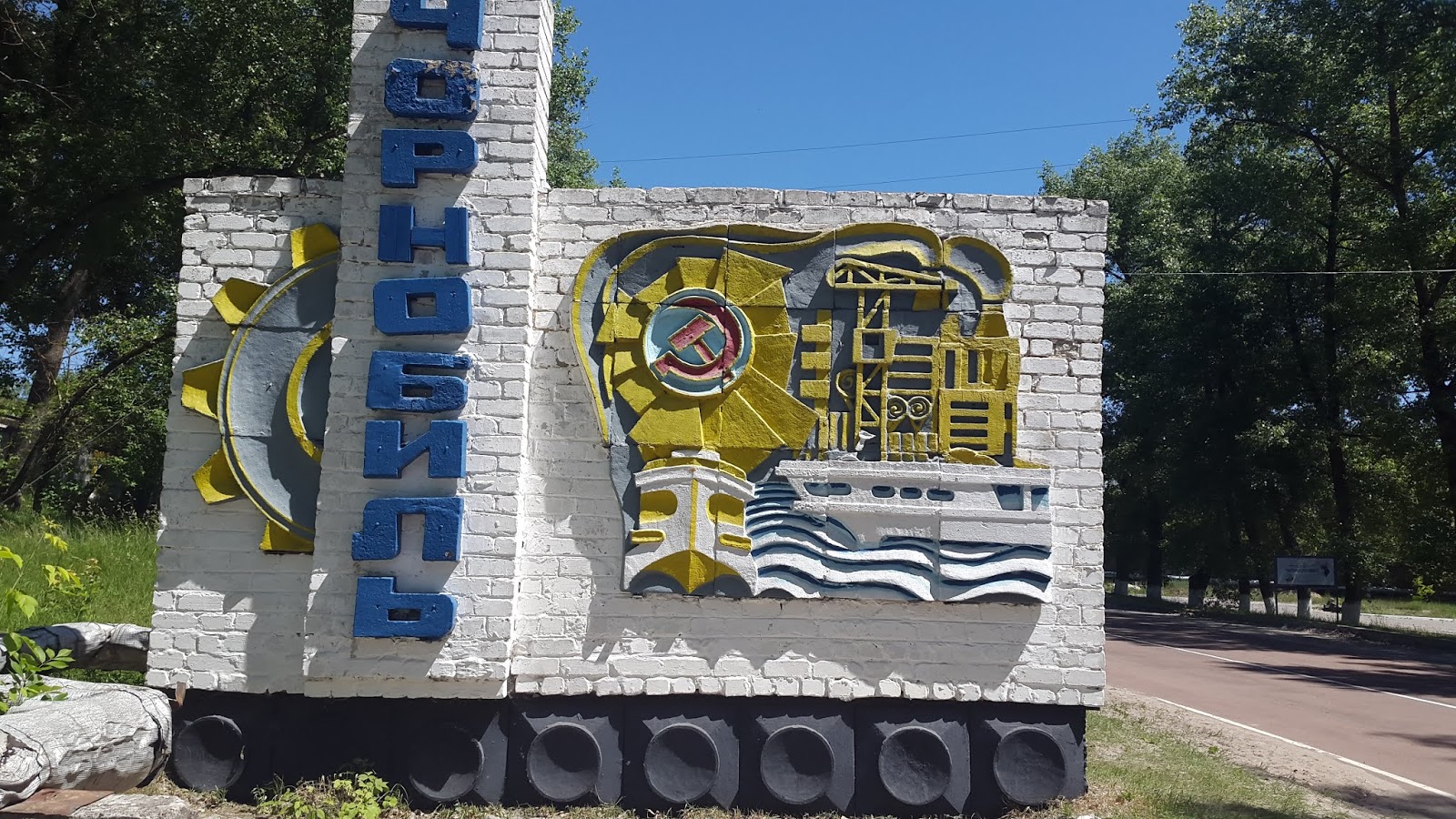
This blog mostly focuses on London, my home city, but occasionally it strays beyond the UK capital’s borders. So it was that I recently had a tour of Chernobyl - the site of the infamous catastrophic nuclear accident in April 1986 which horrified the world. The Chernobyl Power Plant disaster took place in what is now Ukraine, near the border with Belarus. Part of the Soviet Union as the Ukranian Soviet Socialist Republic, Ukraine would go on to declare independence after the collapse of the Soviet Union roughly five years later. It's thought that the Chernobyl disaster was a major factor in the USSR's eventual collapse.

Arriving at 5am at Kiev Airport on a plane full of Liverpool FC fans, due to their team playing Real Madrid in the Champions League final in the Ukranian capital that weekend, I faced a baffled woman at passport control when I proclaimed that I wasn’t here to see the football, as she assumed, but rather to visit Chernobyl. Battling lack of sleep and the difficulties of adjusting to the Cyrillic alphabet, my cab drove through Kiev suburbs filled with monumental green apartment blocks towards our apartment (just six pounds a night each). The next morning, apprehensive to say the least, myself and friends arrived at the site after a two-hour van drive from Kiev, arranged from the officially approved tour company – the only way that the vast area comprising Chernobyl Exclusion Zone (also known as ‘The Zone’, or ‘The Zone of Alienation’) can be visited. 

After waiting for a while at a foreboding checkpoint in the sweltering heat, we were finally let in, only to carry on driving through long, nearly deserted roads surrounded by woodland. The whole atmosphere felt slightly creepy, as if from a horror film, exacerbated by the knowledge that much of the woodlands had been renamed ‘The Red Forest’ after the disaster, due to the fact that the pine trees had withered and died from the radiation, displaying a ginger-brown colour as they did so. Many of those dead trees were bulldozed and buried in “waste graveyards”, making way for a more healthy set of pines. Yet the silence around us as we wound through the forest was ominous nonetheless. We finally wound up at Chernobyl town, from which the nuclear power plant took its title (the name comes from the Ukranian for a wormwood insect).


Chernobyl town monument

Once a thriving city of 14,000 residents, the town was evacuated thirty hours after the disaster; it now has around 690 hardy people, with many houses around the inhabitants’ abodes lying empty. One of the most poignant episodes in this initial tour of the zone was a group of signs dug into the ground, one after the other, retreating into the distance, listing the names of villages - on both sides of the border between Ukraine and Belarus – that had to be evacuated (below).


This sombre scene was coupled with the monument below to the firemen who lost their lives battling the explosion, and a statue of the Angel of Death, a striking symbol personifying death that felt poignant given events (both below).


There was also a museum installation dedicated to the disaster, and a statue of Lenin (below) – the only one left in Ukraine, according to the tour guide’s faltering English. All other monuments to the man in the country have been taken down post-independence.


The Chernobyl hotel, meanwhile, felt like something from a John Le Carré novel set beyond the iron curtain. With its army barracks-style wooden build and soup served in the dining room by unsmiling babushkas, it felt like an authentic Soviet experience twenty-five years on from the collapse of the Union.


The Chernobyl hotel


Soup in the hotel. No butter for the bread

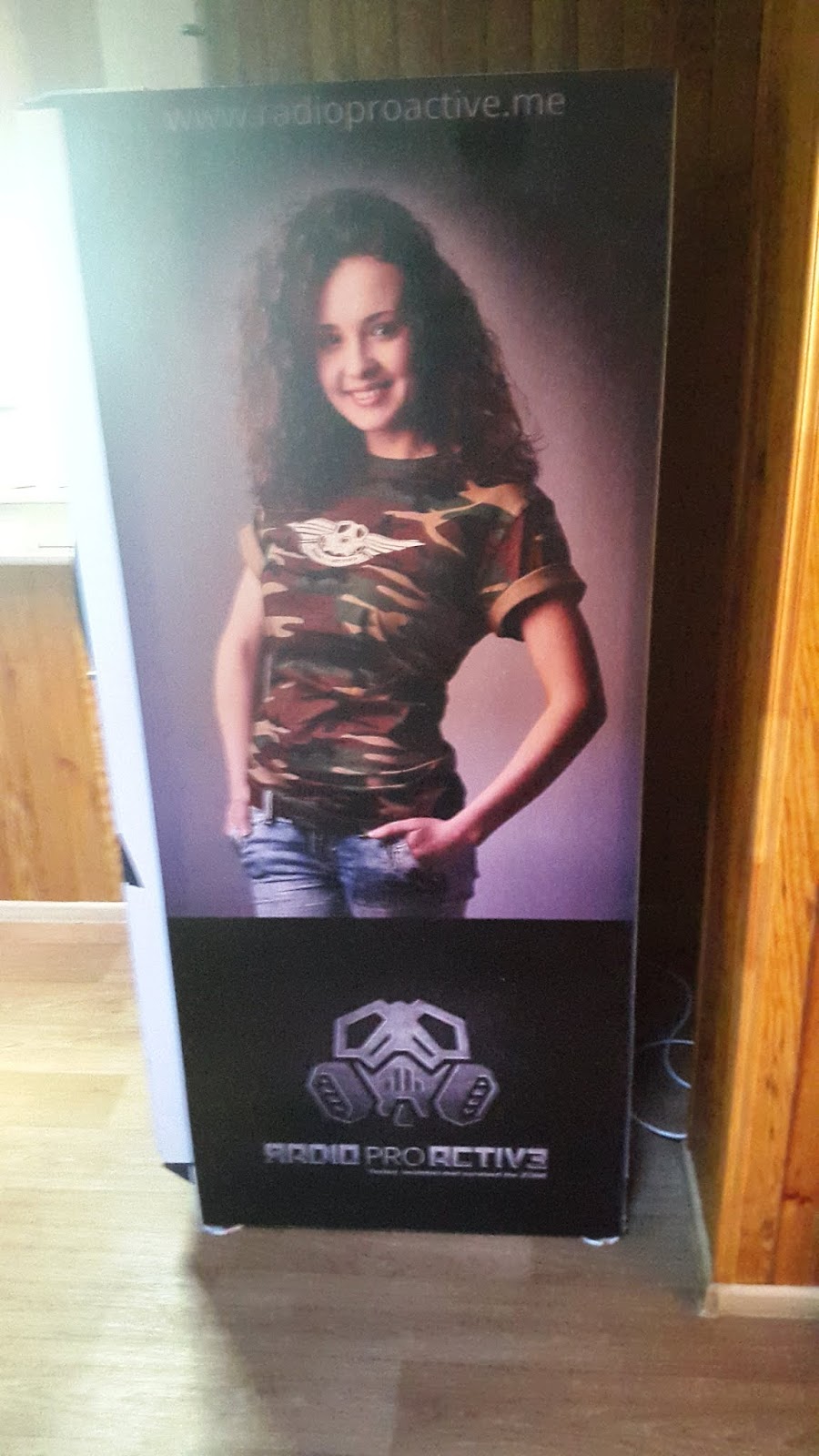
Meanwhile, in front of the hotel – the only place we were allowed to go without a tour guide presence – we were attacked not by radiation, but rather by huge amount of gnats, who buzzed around our sweaty heads in the heat, and later managed to take bites out of me while asleep in bed (despite my hotel room having windows that couldn’t be opened in order to stop them coming in, with the only air coming through an adjacent mosquito net). Yet it was the bizarre merchandise that really struck me, with everything from the slightly bad taste glow-in-the-dark fridge magnets to t-shirts (“I’ve been to…CHORNOBYL”); to whole gas suits available to buy; to radioactive ice cream; and an incongruously smiling lady below (below).


The merch stall, Chernobyl-style


Chernobyl ice cream...with radioactive sign

The nearby convenience stores were similarly strange. I couldn’t help but think of Tarkovsky’s Stalker when entering ‘Roadside Picnic’ a convenience store, bar and grill near the Hotel (below).


The film was based on a book also called Roadside Picnic, with the film’s own restricted ‘exclusion zone’ including a room in which supposedly one’s wishes and desires could be realised. That mystical masterpiece was released around seven years before the Chernobyl accident, yet it’s difficult not to make comparisons. Both the Zone in the film, and the Chernobyl Exclusion Zone, are restricted areas with their own ‘protocol’, where normal rules mostly do not apply. The Zone’s dangers in the film are invisible, just as the radiation is in Chernobyl. It’s rumoured, too, that Tarkosvky’s tragic eventual death may have been due to poison from the chemical plant that was near where they were shooting Stalker. Things got even weirder when I saw a sticker in the hotel advertising a computer game, called S.T.A.L.K.E.R., in which the protagonist runs around the abandoned city of Pripyat (more of which below) and other parts of the Exclusion Zone, battling various creatures. Several iterations of this computer game exist, with subtitles such as ‘Call of Pripyat’ and ‘Shadow of ‘Chernobyl’. As it turns out, 'Stalkers' was apparently later used as a nickname for the scientists and engineers who explored the interior of Chernobyl’s ‘sarcophagus’ that continues to enclosed the actual reactor after its construction following the accident (pictured below).


This is disaster tourism – and I felt conflicted. Was my very presence there distasteful and disrespectful, given the catastrophic effect that the explosion caused for people and animals in the area? Or was my money going to noble causes that helped survivors of the disaster? I wasn’t really sure, and remain ambivalent even now. Should sites that once witnessed disaster remain closed to the public, or should the public be allowed to bear witness years later? The slightly naff horror film Chernobyl Diaries, in which a bunch of gormless American tourists get stuck in Pripyat, and encounter various zombie people, received angry responses from various charitable organisations dedicated to helping survivors of the disaster.

Leaving aside these ethical concerns, what was undisputed is how fascinating the tour turned out to be. It included visits to Orthodox Churches inside the Zone (below) – proof that religion never really left the former Soviet Union countries despite the USSR’s atheistic pretence.


Furthermore, we also conducted a tour of a gigantic former listening station (below), from which they would diligently watch out for signals from the West in case ‘they’ planned to invade. Stretching high up on many levels, I made it only as far as the first one due to worries about falling down the vertical concrete ladders that connected each ‘floor’; our two-day tour partners, four Polish men, included one hardy soul who climbed all the way to the top. We watched rather awkwardly from near a radioactive sign, indicating radioactive rubbish that had been buried underneath the ground (below).


There was also the second reactor, which was abandoned after the disaster. An enterprising artist had been in here, with their own version of Banksy, as a stray dog walked around (below). Many of the dogs residing in Chernobyl Exclusion Zone have had a hard life, with radiation in their fur and exposure to the brutal cold in the long Ukranian winter.


The unbuilt reactor


Then there was the field full of rotting machinery, where our Geiger counter started bleeping at alarming rates, indicating that radiation still hung around here, an unseen threat even despite all these years, yet one too negligible to make any serious differences to those visiting. The Geiger counter went crazy too when exploring an abandoned Kindergarten, where baby dolls had simply been left behind by those who had fled (below). 


Then there was the tour of the ‘ghost city’ of Pripyat, built in the 1970s largely to serve the Power Plant. The entire city’s population of 50,000 was evacuated after the disaster, leading to a deeply eerie feeling when climbing up the abandoned tower blocks. Nature had taken hold all around, with once thriving streets now overgrown with trees.


View of Pripyat city centre from top of building, with the reactor enclosed by the 'sarcophagus' clearly visible

As we approached the centre of Pripyat, we suddenly witnessed many other tourists on ‘rival’ tours, gaping at the huge former administrative buildings and abandoned playground rides. One building had been some kind of arts centre, with an artists’ studio followed by a large theatre auditorium. Another was an abandoned supermarket, the signs for produce still left hanging from the roof, rotting away. There were factories and warehouses that we went into, all full of decaying machinery.


Abandoned Ferris wheel in Pripyat city centre

Abandoned bumper cars
Artists' studio, with theatre in next room

The roof of the theatre, with stage pulleys
Abandoned building in central Pripyat

Abandoned supermarket

One building we went into ad a room that looked like some kind of indoctrination classroom, addressing the Cold War rivalries of the day with a slant on the superiority of the Soviet Union (below).


In another, a part of the roof had caved in (below).


It was easy to imagine that life had existed here once, with happy families going about their day and people in full employment. Yet now it felt like the end of the world. Or a devastated city in a war zone: with windows smashed in and buildings decaying and peeling, it felt like we could be in Mogadishu or Aleppo, yet without the snipers.


And then we toured the abandoned residential buildings (above). We went into so many of them that we lost count and my head began to hurt. One had disconcertingly crumbling stairs, with the wall having completely fallen away, leading to a sheer open drop next to me as I nervously descended to the top of building. Another had the disturbing vision of a dead dog, decaying on the floor, on the top level, with the windows – shorn of any glass – displaying a panoramic view of the area (both below).


In all the tower blocks, there was apartment after apartment full of crumbling furniture and items, including a typewriter and 80s computer manuals. Wiring in the wall had been pulled out, while pianos lay covered in dust.


80s typewriter in abandoned apartment

80s Ukranian computer magazines

Wiring on wall in apartment

Baby doll on piano in apartment

It was the visits to these residential towers that really brought home the tragic enormity of what had happened: people were forced to leave at such short notice that all they could take with them was a suitcase. All other personal possessions had to be simply left behind. A population had been uprooted, the deracinated people of the city forced to move due to an invisible encroaching enemy. It was this that stuck with me the most as we returned, stunned, to the normality of the hustle and bustle of Kiev, the big city at the heart of Ukraine.

All photos taken by GoodnightLondon.

Wednesday, February 07, 2018


In Anna Minton’s book from 2012, Ground Control, she touches on how not just London but the UK as a whole has become full of spaces that look public but are in fact private. These privatised public spaces are often in land that historically has seen ancient rights of way, yet have become owned by a developer who can set their own rules. This is something that Britain has sleepwalked into. Just as we have endured privatisation of our national trains, we have also seen the rise of land privatisation. 

The Guardian’s investigation in 2017 revealed that public access to 'pseudo-public spaces'  ('Pops' for short) remains at the discretion of the private companies. Details about their identity can often be opaque. This effectively means that land that should remain public is at the whim of landowners, who are often corporations – precisely why The Guardian and Greenspace Information for Greater London CIC (GiGL)’s map of pseudo-public spaces in London is so important.

Take Dray Walk, off Brick Lane (pictured above), where the 1001 Club and Rough Trade East record shop are. It’s a trendy stretch, with tourists milling around and food stalls. I was once told late at night that I couldn’t walk through there, as a shortcut to Liverpool Street Station. When I asked why, the security guard pointed out that I had a beard and rucksack, and that I therefore theoretically could be a suicide bomber. He then pointed out the ‘Private Property sign’. 

At the same time as London faces a housing crisis – touched on in my blog post below this one – among those public places that we can access are often private places in which corporations can do as they please. This has led to that most basic exercise of democracy – the right to protest in public squares – being denied, as when the Occupy movement’s rally at Paternoster Square, next to the London Stock Exchange, was disrupted by the police on the grounds that they were trespassing on private land. Furthermore, when the public are normally allowed to access pseudo-public spaces, there is often an effort to dissuade people congregating, such as the lack of places to sit. In addition, as Frontier Psychiatrist puts it, "certain behaviours and people [e.g., the ‘right’ kind] are encouraged whilst others are seen as undesirable and excluded". I wasn't allowed into Dray Walk that one time by that security guard. Yet others were allowed in – just not me, because I didn’t look like the ‘right’ kind of person in the mind of the security guard, who had discretion over who could be allowed into an ostensibly public space.

This continued erosion of our civil liberties by corporations on land that should remain common for all is a foreboding vision of where London could end up. It’s not hard to envisage a dystopian future in which more and more ‘public’ land is allowed to be public only at the whim of large corporations, and with numerous, often unfair regulations. Greater transparency is required on these spaces, as with other cities. It shouldn’t be forgotten that common land for all should be a basic right, not a privilege.

Thursday, October 19, 2017

1925 map by WB Northrop satirising landlords in London. Photograph: Cornell University/PJ Mode Collection of Persuasive Cartology

It’s been fourteen months since I last commented on the EU referendum. Since that point, an enormous amount has happened, culminating in the stand-off between the UK Government and the EU that we see at the moment.

Along the way, we’ve seen all kinds of political fireworks, from the debacle of the snap General Election, in which the Conservatives had to go into a coalition with the Democratic Unionist Party to shore up their Government after failing to win a majority, to the Daily Mail resorting to blatant homophobia in its ‘Enemies of the People’ front cover.

What has also been distressingly noticeable, as The Guardian has confirmed, is the rise in the hate crimes that has spiked as a result of the referendum. To claim, as some have done below the line (BTW) in other Guardian articles, that the rise is due to a number of factors rather than the Brexit result, is disingenuous, as this Independent article confirms.


What has also been noticeable since the referendum is a tendency to blame EU migrants for the UK’s housing crisis, and the soaring costs in living - particularly in the capital, but also in certain other parts of the country too. This is far too a simplistic view, and ignores how our housing system works.
 

As this comment piece for The Guardian points out, in 1981 most people could either afford to buy property outright – at hardly a fraction of what property costs now, even accounting for inflation – or they had access to Council housing. Margaret Thatcher’s policy of selling off Council housing at this time greatly reduced the housing stock, a policy that was exacerbated, to some extent, under Labour. As it turns out, much as that Council housing was often of shoddy make, as Adam Curtis’s first documentary exposed:


There is a kind of passing of the buck in that film which is illustrative of where we are now. Instead of admitting that a lot of the problems that the UK finds itself in are of its own doing, the right-wing media have instead put the blame on others. This ignores the fact that the Government has been hugely ineffective in building new housing. This is because of a combination of factors: those controlling a good deal of housing in this country have very little interest in seeing new housing built. Another Guardian article, this time on the aristocracy, is striking for noting just how much property is concentrated into few hands. As the article states:

“One legal provision unique to England and Wales has been of particular importance to these aristocratic landlords: over the centuries they built many millions of houses, mansion blocks and flats, which they sold on a leasehold rather than freehold basis. This meant that purchasers are not buying the property outright, but merely a time-limited interest on it.”


Much of the aristocracy and the property-owning classes – by the latter, I mean those who own a whole number of properties, not just one - are aligned with the Tories. It’s in the interests of the ruling class to not see further housing built, because it would devalue the portfolio of the property owning classes.


The situation has been exacerbated by a ruthless Not In My Back Yard (NIMBYism) and the lack of thorough regulation of the private sector, which was deregulated in 1989. Unlike many other parts of Europe, the Tories have steadfastly refused to introduce a rent cap, instead leaving it to the free market. The predictable consequences of this are that landlords have been able to get away with murder, condemning the younger generations to have no choice but pay punitively high rents. Add to that the fact that the Tories have sold off public land, and the result has been a perfect storm in the housing sector.


At a time when there is a homeless crisis in London, much property in the capital continues to lay empty – and much beyond. Near where I grew up, an area called Woodberry Down - traditionally a rough and run-down area, but with a thriving community – has been transformed into shiny tower blocks that overlook the reservoirs at Woodberry Wetlands, which I had the fortune to visit nearby. Much of those flats lie empty, with many bought by rich Singaporean businessmen as part of a property portfolio.


There are other examples. From a friends’ flat in Stoke Newington, on the second floor, I can see a huge expanse of grass. That expanse, she tells me, never has anyone in it. It lies empty while kids play football in the tiny yard of concrete next to it. It should be free land, yet is owned by someone who forbids the public from trespassing on it.


Then there is the mansion on City Road, near where I work, that has been lying empty for as long as I can remember. It had been a squat since 1995 – I know, as I went to a squat party there once – before being boarded up. There is now no-one in there, and it continues to lie derelict.


The 21st century has seen property being used as a commodity rather than a place to live, in a way that it never quite was before. This is not the fault of the EU. The fact that entire streets in London have been exposed as full of empty properties because they have been used as part of portfolios by the rich from countries such as Saudi Arabia, Russia, and Singapore, is a fault entirely of the UK Government. The greatest trick Tory politicians who voted Leave pulled off is convincing the electorate that our housing crisis is due to people from other EU countries living here. Yet leaving the UK will not solve our housing crisis. Only rent caps, and putative taxes on those who leave property empty for a substantial amount of time (or, better still, forcefully taking back the property) can introduce some kind of sanity into a dysfunctional system – something that Corbyn had included in Labour’s manifesto during the General Election. For that, he was savaged by the right-wing press, which only showed their genuine fright at his chances of being elected. At the next GE, it could genuinely happen.

Wednesday, April 05, 2017


I mentioned in a previous extensive blog post some volunteering that I've been involved in, in conjunction with an organisation called On The Record, a not-for-profit organisation looking into oral and visual history in London – especially that of ordinary people and the working-class whose accounts of life may have been marginalised.

The project that I have been working on, A Hackney Autobiography, has been a deeply personal dimension for myself, given that I grew up in the borough. Even more specifically, though, the project has focused on Centerprise – an organisation that my father was involved with in the 70s and 80s. A community centre that housed a bookshop, a cafe, a youth arts and performance space, a publishing project, and a housing/welfare advice service (the latter of which my father was involved with), Centerprise was unique in a pre-gentrification Hackney, where adult illiteracy was still relatively high and the borough remained one of the most deprived in the country.


The project involved unearthing an enormous archive, most of it at Bishopsgate Institute, to do with Centerprise: from the books released as part of the publishing project (which I then converted into digital), to the audio interviews that other volunteers conducted with those who were involved with Centerprise at the time (including with my father), to researching vast back catalogues of the Hackney People's Press, a left-wing newspaper based at Centerprise.

Last November, there was the first launch party for the project, at Hackney Museum, as I mentioned in this other blog post.

Now it's the turn of a second launch party, this time to celebrate the culmination of the volunteering into a book, The Lime Green Mystery: An Oral History of the Centerprise Co-operative. Accompanying the book will be an app and a website, both of which will be announced at the end of April.


Details on the flyer above (click on it for an enlargened image), and here:

A Hackney Autobiography: Launch Event
Sunday 7th May 2017
5-7pm
Sutton House, 2 & 4 Homerton High Street, London, E9 6JQ (map)

There are limited places, so booking is advised: email info@on-the-record.org.uk

Just before the party, there will be a unique chance to preview one of the audiowalks featured on the apps as part of a group. To book a place on the Inside Out Homerton audiowalk, please contact On The Record by Friday 21st April. Later bookings will be accepted if places remain available.

Event organised with Pages of Hackney.

Thursday, February 16, 2017

Some music from my album features on a short documentary by a friend of mine, Naveed Nasir, which can be viewed below.
The documentary follows his partner teaching workshops in making signet rings at Milton Keynes Arts Centre.


Mark Making from Naveed Nasir on Vimeo.

There will be an exhibition at Milton Keynes Arts Centre on Saturday 18th February 2017, from 1-3pm, entrance free, exploring the themes touched on in the documentary.
More information here

From the venue website:
Mark Making celebrates Milton Keynes’ young people and the City’s legacy in an exhibition representing time and identity through a series of workshops in collaboration with students of Stephenson Academy, connecting past and present, providing a platform for the new wave of inventors, architects and designers to have a voice and share with the City what it means to them to be a young person living in Milton Keynes. Mark Making acts as the fourth and final instalment of Common Ground; 12months of collaborations between artists Yinka Ilori, Ibiye Camp, Tom Dale, Izzy Parker, Groundwork and our communities.
The exhibition will visually represent the time passed in the form of an immersive installation created from thousands of hung multiples. Artist Izzy Parker will showcase her participant’s identities, her father’s and her own identity in one setting; representing a generation of identities in one exhibition.
Parker asks students to explore their own identities by teaching them how to design and make their own signet rings and she will explore her own identity by creating a new body of work that is homage to the recent passing of her father.
The exhibition will provide a platform to encapsulate different perceptions of identity. Her own, her father’s and the students. The show will feature an immersive hanging installation by Izzy Parker, the students finished signet rings and a short documentary of the project created by filmmaker Naveed Nasir.
Set in Milton Keynes Arts Centre’s 17th century barn gallery, this event offers an opportunity for Milton Keynes residents to come together to share food and celebrate the achievements of the City’s young people.
An Introduction 
2017 will herald the 50th anniversary of Milton Keynes and much has changed since this ‘new town’ was officially inaugurated in 1967 with a simple brief to become a ‘city in scale’. Artist Izzy Parker will be marking this special occasion by exploring the theme of identity and asking participants from the Stephenson Academy to design and make their own signet ring.
Signet rings have been used since the 1400s as identification marks. They were first used to mark documents by way of an official seal being imprinted into hot wax or soft clay. They were also used to mark doorways and even seal tombs. Used on a global scale by men and women of great standing; each ring as individual as the person wearing it, it often hosted a bespoke family crest or symbol. The rings were considered such an official mark of identification, that to prevent fraudulent acts being committed they were often destroyed when their wearer died.
Izzy Parker has chosen to work with pupils from the Stephenson Academy to ask them to consider how and what factors represent their own identity. Be it their own personal history, clothing, friends, family or even their favourite musician. The ‘making’ element of the project will offer a calm, focussed and contemplative activity for them to engage with. Providing the head space to consider what and who they relate to as young adults.
It is important we find our own clan; where we feel we belong alongside peers we respect so we can contextualise where we fit into society and our community.  Izzy Parker, Artist
Parker’s own exploration of identity has been heightened by the recent passing of her father in December 2015. Interested by how signet rings were destroyed after the wearer died, somewhat eradicating the identity of the individual, Parker will investigate how we often try to hold on to the identity of a person after their death. She will consider our perception of memories and how they can change over the course of time.
Secondary to the signet ring workshops Parker will run some set building classes where students will assist in the build and installation of the set for the exhibition. By the end of the project they will have learnt a broad range of goldsmithing, set building and practical skills.

Tuesday, December 20, 2016


More missives from me will be coming soon after the festive period, but for now I thought I should mention that following on from the post below about the launch party for A Hackney Autobiography: Remembering Centerprise at the Hackney Museum with On The Record, there is a temporary exhibition at the Museum that leads on from the launch party and contains plenty of the work that myself and On The Record have been involved with for the last two years (again, see the post below and this post on the project).

The exhibition is entitled People Power: Black British Arts & Activism in Hackney 1960s-2000s, and contains much of the work that Centerprise was involved with, along with related accounts of life in the borough between these periods. Entrance is free and the exhibition runs until the 21st January 2017. General details of the Museum’s address and opening hours can be viewed here.

A Merry Christmas and Happy New Year from GoodnightLondon to all.

Wednesday, November 09, 2016


I mentioned a while ago in a previous blog post that I have been involved in a project looking into the history of Centerprise. Centerprise was a cafe, bookshop, youth arts space, publishing project, and housing advice service (the last of which my father was involved with).

The project has taken place over the last two years or so, with people volunteering in their spare time. A huge amount of material has been drawn from Bishopsgate Institute's vast archive among other source (covered in my previous blog post linked to above). This work archiving, mapping, interviewing, scanning and digitally converting will culminate in a launch party on Saturday 26th November, from 11:00-16:00, at the Hackney Museum, Ground Floor, Learning & Technology Centre,1 Reading Lane, Hackney, E8 1GQ [map], where a website, book and mobile phone app will be launched.


Entrance is free but people interested need to register first at this Eventbrite page. There are still some tickets left. If the tickets sell out, it may still be possible to turn up.

The order of the day will be:

- 11am – 11.30 Welcome to the day, including words from Margaret Gosley (co-founder) on how Centerprise began.

- 11.30-12.00 Tours of the People Power exhibition by curator, Niti Acharya

- 11:45 – 12:45 Panel Discussion 1 -  Centerprise and education, past and present

- 12:45 pm- 13:45 Light lunch available in learning room

Tours of the People Power exhibition by curator, Niti Acharya

- 13:45 – 14:45 Panel Discussion 2 – The legacy of Centerprise

- 14:45 – 15:30 Open mic: performances and readings from Centerprise and beyond

- 15.30 - 16.00 Plenary discussion: have the final word on A Hackney Autobiography

There will also be coffee and snacks available.

Details of the app, website and book will be put up here subsequently.

Monday, September 26, 2016

Apologies for the short notice, but I will be both promoting and playing live at this...I'm on at 8:15pm under the name Dream Maps. My album can be listened to here on Bandcamp.
Tickets are £6 at WeGotTickets. It's going to be a hell of a night!


Monday, August 15, 2016

The EU Referendum (Part 3)


It’s been nearly two months since the EU Referendum, and I’m still trying to get my head around what has happened. Fifty-two percent of the voting public chose to vote to leave the EU again forty-eight who voted (like me) to remain. As a result, we have been left with an extraordinary and difficult situation, with a nation divided like never before. 


The first thing to note is that what was supposed to happen in the event of a leave vote was that the day after the referendum, David Cameron was supposed to formally trigger Article 50 – the EU legislation that formally confirms a member-state leaving the EU. What was supposed to happen subsequently is that said country then would have two years to subsequently complete the exit – a ‘Brexit’, in Britain’s case (the country could spend longer than two years, depending on a vote from other EU countries). What happened, of course, is that Cameron could not bring himself to trigger Article 50, instead passing on the poisoned chalice to his successors in a cynical move designed deliberately to get one over his rival Boris Jonson. In the chaos that followed, Johnson and Michael Gove could not bring themselves to trigger Article 50 either, despite being the main cheerleaders for the Leave campaign. To put it bluntly, none of them had the balls to actually go ahead and do it.
We now know that the baton for triggering Article 50 has been passed to Theresa May, the new Prime Minister. She, too, cannot bring herself to trigger Article 50, on the grounds that she has to wait first for ‘trade deals to be formalised’. The problem is that trade deals can take years and years, during which there is never likely to be a ‘perfect’ time to trigger Article 50. By refusing to actually go ahead and trigger it, the UK has been placed in a dreadful limbo status, affecting areas such as science research, which rely on cross-EU collaboration and funding, irrevocably. In turn, UK science graduates will now find out that their chances of work will be cut off considerably – despite Philip Hammond’s assurances to the contrary. This limbo state is massively irresponsible for the UK economy, and a perfect illustration of why the referendum should never have taken place in the first place.  


If Article 50 does ever get triggered, the UK would essentially face two options. The first option facing the UK post-referendum would be to join the Single Market as a member of the European Free Trade Association (EFTA), the regional free trade area that comprises non-EU member states Iceland, Norway, Liechtenstein and Switzerland. The UK left EFTA in 1973 in order to join the European Economic Community (EEC), the forerunner to the EU. Post-referendum, however, there is an argument for it to rejoin EFTA. What unite the four EFTA countries with most EU member-states are two things:


- they are all part of the Schengen Area, guaranteeing freedom of movement – with the exception of the UK (which is still an EU member state for now) and the Republic of Ireland, which share their own Common Travel Area (CTA); and the exception of Romania, Bulgaria, Croatia and Cyprus, who have a legal obligation to eventually join Schengen;


- they are all part of the European Economic Area (EEA) – in essence, the Single Market - with the exception of Switzerland; the EEA also includes all EU member-states (except Croatia, the newest EU member-state, which is a provisional EEA member).


Joining the Single Market would require the UK to accept freedom of movement – one of the four pillars of the Single Market – and join the Schengen zone, something which the UK has never done, having previously gained an opt-out, as mentioned above, along with Ireland. It would mean, too, that many of the xenophobic promises that the Leave campaign paraded – that EU immigration to the UK would be cut dramatically – and which Leave voters chose to believe, would be dashed.  In addition, Norway could veto the UK’s return to membership of EFTA, fearing its loss of influence in the organisation with such a large member joining among small nations (Norway, Switzerland, Iceland and Liechtenstein between them in total have a population of 13 million compared to the UK’s 65 million). Theoretically, the UK could be a member of EFTA but not the EEA, which is the position that Switzerland, a former signatory to the EEA, who then left, is in; but this would be hugely complicated, and would mean that the UK would still not be part of the Single Market via the EEA.


The second option for the UK is to not sign up to either EFTA or be part of the EEA. This would mean that the UK really would be on its own in Europe. If this happened, the UK would have to revert to WTO rules regarding trading, which could be a hugely bumpy grounding. Free trade agreements (FTA) are hugely complicated, drawn-out procedures; to give one example, the EU-South Korea FTA takes up a mammoth 1432 pages. Similarly, the controversial EU-Canada CETA deal has taken at least seven years and is still subject to negotiations. What would happen to the interim is a moot question: the UK would essentially be starting from the beginning again, in contrast to Canada, who could rely on NAFTA (their FTA with the USA and Mexico) financially while CETA was being negotiated.


Problem is, since Thatcher’s reign, the UK economy has shifted from one based on manufacturing to a services industry – particularly financial, with the country’s economy bound up with the deregulated City. The UK’s economy has become inexorably tied-up with deregulated finance and a housing bubble, rather than keeping a strong manufacturing base, as in Germany. If the UK leaves the single market, which it would do so if it formally left not just the EU but also the EEA, and didn’t join EFTA, the lack of access to the Single Market would hit the City, with many financial firms choosing to relocate to Dublin, Paris and Frankfurt – all cities within EU member-states. The UK could respond to this by becoming essentially a version of Switzerland or Singapore, becoming a nation-wide tax haven, but is really what we want? The bottom line is that, unlike Norway, or Commonwealth countries such as Canada and Australia, the UK does not have vast amounts of natural resources to exploit any more, having squandered the proceeds from North Sea oil on tax breaks for the rich. For this reason, membership of the Single Market is paramount for the UK’s economic future whether we like it or not. 


The reality is that the EU holds the cards here. It exports much more to the UK than the UK exports to the EU, and as a bloc of 27 nations has vastly more clout than the UK on its own. The UK has to accept that remaining in the EU is always going to be the best option for our economy.


The response to Leave voters to this is that Brexit is all about ‘sovereignty’. What they are missing is that in the twenty-first century, most countries are too bound up in international treaties to fully be called ‘sovereign’. Even if the UK leaves the EU, it will still be bound up in supranational treaties from NATO, the UK, the IMF, the WTO, and a host of others – all of which make some rules for which the UK government has to obey in order to thrive in the modern world. The alternative is to be North Korea.


Instead, while we were part of the EU – and which are still a member of, for now – we had an extraordinarily good deal, with opt-outs on the rebate, the Euro, and the Schengen zone (which I've spoke about already). This has meant that the UK has essentially afforded a special status. Yet that has still not been enough for the Daily Mail, The Express and The Sun, who have spent the last forty years promoting a clichéd, anti-European agenda (spearheaded by Boris Johnson, among others), all in the name of ‘sovereignty’, which the UK never lost, and a sense of superiority. This anachronistic viewpoint has missed the endless benefits that the EU has provided, from pumping money into deprived areas (some of which then voted Leave, paradoxically), to regulation on clean beaches, to the opportunity for British citizens to live and work in twenty-eight member-states – the latter of which may never be known by future generations of Brits.  Instead, we can look forward to insular Britain, which could be even smaller in Scotland leaves – not to mention Brexit complicating the peace process with Ireland, the UK’s one land border, a process that could even theoretically lead to Northern Ireland rejoining the Republic (except for Ulster). The irony is that this break-up could be triggered by the same Leave voters who wave the Union Jack, a symbol of a Union which could be no more because of Brexit.


Instead, the only answer is to abandon Brexit, and look to Europe, the continent that we are geographically tied to despite being an island. The UK’s future is in Europe, and as such, the triggering of Article 50 should be rightly recognised as madness.